Six Questions People Ask About Daily Habits and Memory — and What Published Studies Have Found
From the dinner plate to an afternoon walk, here is what peer-reviewed research has, and has not, found about routines and the way we remember. Sources are numbered and listed at the bottom.
Prepared by Quillwood Wellness · Updated November 2026 · About 8 minutes
Photo: a man among garden greenery (model).
Good to know: this article is educational and general. It does not give medical advice, and it cannot replace a visit to a licensed healthcare provider.
1/5
Roughly the share of resting energy that goes to the brain[1]
120
Older adults enrolled in a one-year walking trial[2]
47
Clinical trials pooled in a review of meditation programs[3]
Q1
Why do scientists look at everyday habits at all?
Mostly because the brain is so demanding. It weighs only about 2% of the body, yet it takes roughly a fifth of the energy the body burns at rest, and much of that goes to keeping nerve cells signaling to one another.[1]
Reviews in the field point out that nutrition and sleep are among the daily factors that relate to how the brain functions and how memories are formed.[4][5] That makes routines a natural place for researchers to look.
In short: a high-energy organ leads researchers to ask what supports it day to day.
Q2
Does what we eat show up in memory research?
Cooking at home. Photo shows models.
It does. One frequently cited review explains that the omega-3 fat DHA, which comes from fish such as salmon, mackerel and sardines, is a structural part of brain cell membranes.[4]
Another review describes how vitamins B6, B12 and folate take part in turning food into energy and in producing the chemical messengers that nerve cells rely on.[6]
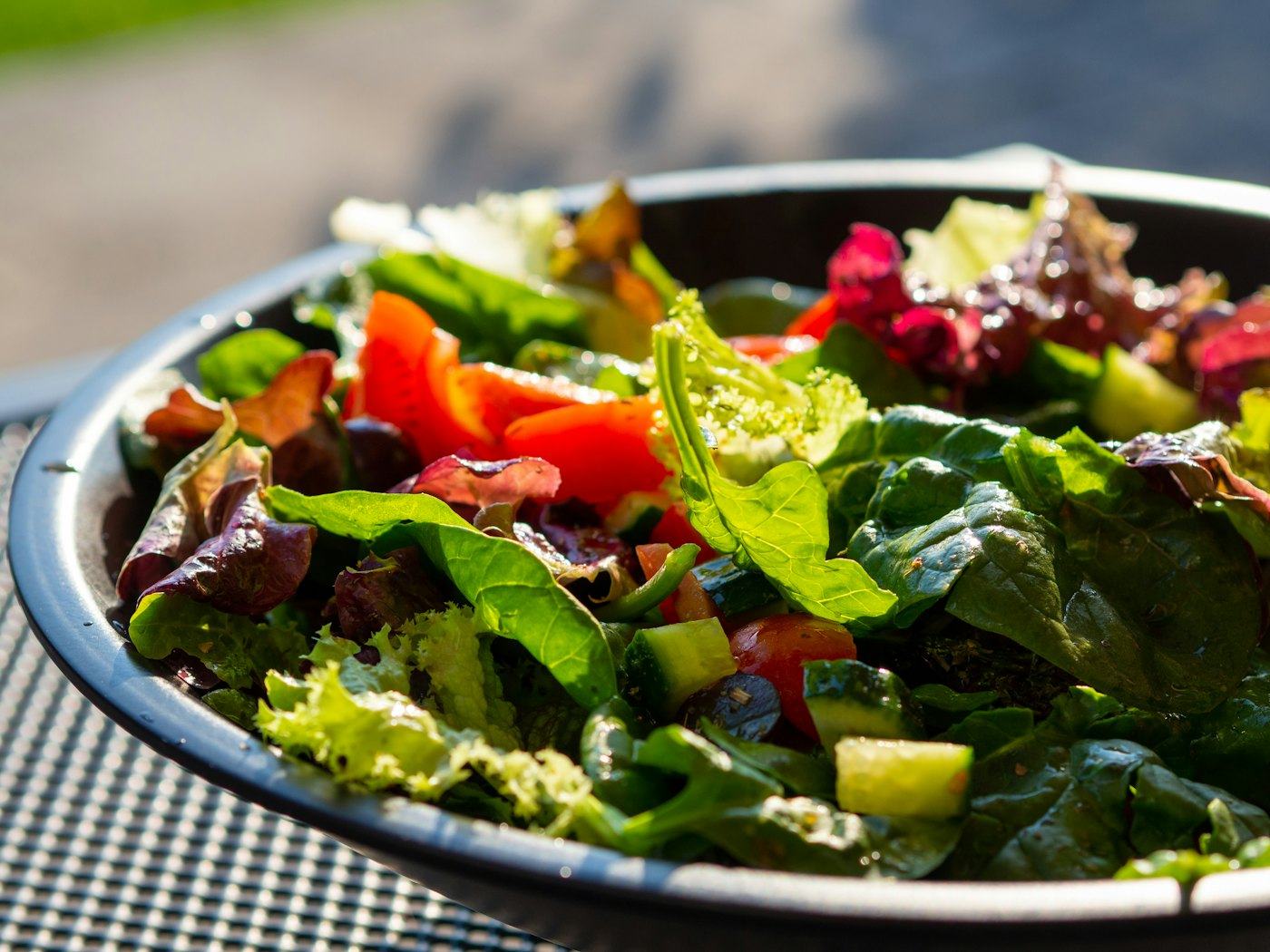
Leafy greens were the focus of a long-term study.
In a study that tracked older adults for several years, people whose diets included around one serving of green leafy vegetables daily showed a slower rate of age-related change on memory and thinking tests.[7]
Scientists in Australia compared brain scans of adults in their sixties taken roughly four years apart. A diet heavy in processed and fried “Western” foods went along with a smaller left hippocampus, while vegetables, fruit and fish went along with a larger one.[8] The study observed a link; it did not show that changing meals changes the brain.
Blood sugar is part of the picture as well. In the PATH Study, people with higher fasting glucose levels, even ones still considered normal, showed more shrinkage over time in brain areas tied to memory.[9]
In short: fish, greens and overall eating patterns have all appeared in published research on memory.
Q3
Is there research on walking and sitting?
Group activity outdoors. Photo shows models.
Yes. In a randomized trial lasting one year, 120 older adults either walked three times a week or did stretching and toning sessions. Brain scans showed that the hippocampus grew by about 2% in the walking group and shrank by about 1.4% in the comparison group.[2] The change was also related to BDNF, a protein that supports the brain’s adaptability.[2]
Sitting has been studied from the other direction. In a small laboratory experiment, four hours of uninterrupted sitting lowered blood flow to the brain in office workers, while getting up for two minutes of walking every 30 minutes kept it from dropping.[10]
In short: one long trial looked at regular walking; a lab study looked at breaking up long sitting.
Q4
How does sleep fit in?
A major scientific review describes sleep as a period when the brain processes what was learned during the day and strengthens it for later recall.[5]
Work in mice found that waste products of brain metabolism were removed more quickly during sleep than while awake.[11] Animal findings like this one do not automatically apply to humans.
When researchers combined data from many studies, they found that disturbed sleep was linked with higher blood levels of some inflammation markers.[12]
A quiet evening routine.
In short: the American Academy of Sleep Medicine and the Sleep Research Society advise adults to get seven or more hours of sleep per night regularly.[13]
Q5
Do hobbies and other people play a role?
Learning a creative skill.
Researchers in the Synapse Project asked older adults to spend about 15 hours a week, over roughly three months, learning challenging skills such as digital photography or quilting. This group improved on tests of episodic memory compared with groups that took part in social gatherings or easier activities.[14]
A systematic review of research on healthy older adults reported that social activity and broader social networks were associated with better scores on several measures of thinking.[15]
In short: staying busy with new skills and with people has been studied in older adults.
Q6
What about stress and individual nutrients?
A review that pooled 47 clinical trials found that mindfulness meditation programs produced small improvements in some measures of psychological distress; how strong the evidence was depended on the outcome.[3]
A few specific compounds have also been studied. Phosphatidylserine, a component of cell membranes, was given for six months to older adults in Japan who reported memory complaints; those taking it improved on some memory measures, especially people whose initial scores were lower.[16] Alpha-lipoic acid has been described as a biological antioxidant that the body also makes in small amounts.[17] And in a 12-week pilot, a small group of older adults who drank wild blueberry juice each day did better on some memory tasks, a result the authors said needs confirming in larger studies.[18]
In short: these are early or limited findings that describe specific groups of people.
What this research does not tell us
Many studies here observed associations; they do not prove that one habit causes a change.
Several were small, short or done in animals.[11][18][10]
Results describe particular groups of volunteers and may not apply to you.
None of this information is meant to diagnose a condition or to recommend a treatment.
Educational resource
Want these topics in one easy-to-read place?
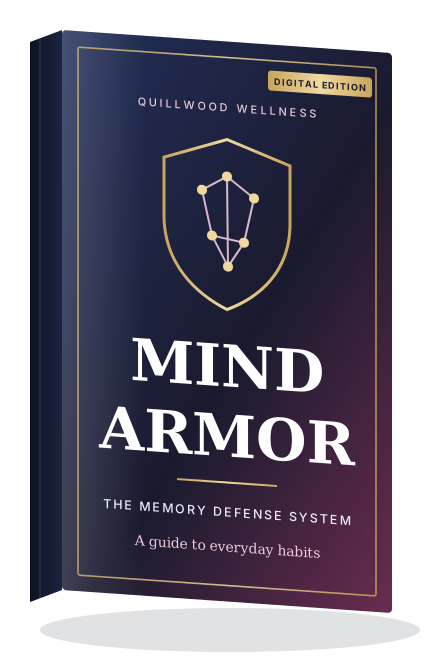
The studies above are spread across many journals and written for specialists. Mind Armor: The Memory Defense System is a digital educational guide that walks through themes like these in everyday language:
nutrients and eating patterns researchers have explored;
daily routines such as movement, sitting and sleep;
learning and social connection;
broader wellness practices for the years ahead.
It is not a supplement, medication or medical program, and it does not promise results. It is delivered digitally by email, with two one-time options and no subscription: the guide (US$ 147) or the guide plus video lessons (US$ 250). Refund requests are explained in our Terms of Use.
Mind Armor: The Memory Defense System is educational and informational only. The studies on this page were independent and did not evaluate it. This is an advertisement.
Prefer to read the science yourself? Every source is listed below and can be opened for free. And for any personal health question, a qualified healthcare professional is the right person to ask.
Sources
Statements on this page are backed by the peer-reviewed publications listed here. The studies were independent and did not evaluate Mind Armor: The Memory Defense System.
Raichle ME, Gusnard DA. Appraising the brain's energy budget. Proc Natl Acad Sci USA. 2002;99(16):10237-10239. pubmed.ncbi.nlm.nih.gov/12149485/
Erickson KI, et al. Exercise training increases size of hippocampus and improves memory. Proc Natl Acad Sci USA. 2011;108(7):3017-3022. pubmed.ncbi.nlm.nih.gov/21282661/
Goyal M, et al. Meditation programs for psychological stress and well-being: a systematic review and meta-analysis. JAMA Intern Med. 2014;174(3):357-368. pubmed.ncbi.nlm.nih.gov/24395196/
Gómez-Pinilla F. Brain foods: the effects of nutrients on brain function. Nat Rev Neurosci. 2008;9(7):568-578. pubmed.ncbi.nlm.nih.gov/18568016/
Kennedy DO. B vitamins and the brain: mechanisms, dose and efficacy — a review. Nutrients. 2016;8(2):68. pubmed.ncbi.nlm.nih.gov/26828517/
Morris MC, et al. Nutrients and bioactives in green leafy vegetables and cognitive decline: prospective study. Neurology. 2018;90(3):e214-e222. pubmed.ncbi.nlm.nih.gov/29263222/
Jacka FN, et al. Western diet is associated with a smaller hippocampus: a longitudinal investigation. BMC Med. 2015;13:215. pubmed.ncbi.nlm.nih.gov/26349802/
Cherbuin N, Sachdev P, Anstey KJ. Higher normal fasting plasma glucose is associated with hippocampal atrophy: the PATH Study. Neurology. 2012;79(10):1019-1026. pubmed.ncbi.nlm.nih.gov/22946113/
Carter SE, et al. Regular walking breaks prevent the decline in cerebral blood flow associated with prolonged sitting. J Appl Physiol. 2018;125(3):790-798. pubmed.ncbi.nlm.nih.gov/29878870/
Xie L, et al. Sleep drives metabolite clearance from the adult brain. Science. 2013;342(6156):373-377. pubmed.ncbi.nlm.nih.gov/24136970/
Irwin MR, Olmstead R, Carroll JE. Sleep disturbance, sleep duration, and inflammation: a systematic review and meta-analysis of cohort studies and experimental sleep deprivation. Biol Psychiatry. 2016;80(1):40-52. pubmed.ncbi.nlm.nih.gov/26140821/
Watson NF, et al. Recommended amount of sleep for a healthy adult: a joint consensus statement of the American Academy of Sleep Medicine and Sleep Research Society. Sleep. 2015;38(6):843-844. pubmed.ncbi.nlm.nih.gov/26039963/
Park DC, et al. The impact of sustained engagement on cognitive function in older adults: the Synapse Project. Psychol Sci. 2014;25(1):103-112. pubmed.ncbi.nlm.nih.gov/24214244/
Kelly ME, et al. The impact of social activities, social networks, social support and social relationships on the cognitive functioning of healthy older adults: a systematic review. Syst Rev. 2017;6(1):259. pubmed.ncbi.nlm.nih.gov/29258596/
Kato-Kataoka A, et al. Soybean-derived phosphatidylserine improves memory function of the elderly Japanese subjects with memory complaints. J Clin Biochem Nutr. 2010;47(3):246-255. pubmed.ncbi.nlm.nih.gov/21103034/
Packer L, Witt EH, Tritschler HJ. Alpha-lipoic acid as a biological antioxidant. Free Radic Biol Med. 1995;19(2):227-250. pubmed.ncbi.nlm.nih.gov/7649494/
Krikorian R, et al. Blueberry supplementation improves memory in older adults. J Agric Food Chem. 2010;58(7):3996-4000. pubmed.ncbi.nlm.nih.gov/20047325/
Advertising Disclosure: This is a paid advertisement (advertorial). It is not independent journalism or a news story, and the publisher may earn compensation from purchases made through links on this page.
Medical Disclaimer: This content is general and educational and is not medical advice, diagnosis or treatment. Please consult a qualified healthcare professional regarding any health matter or before changing your diet, exercise or wellness habits.
FDA Disclaimer: These statements have not been evaluated by the U.S. Food and Drug Administration. Mind Armor: The Memory Defense System is a digital educational guide and is not intended to diagnose, treat, cure, or prevent any disease.
Results Disclaimer: Experiences differ from person to person and no outcome is guaranteed. The cited studies involved specific participants and did not evaluate Mind Armor: The Memory Defense System. Photos are illustrative and show models.